
Rivers of Grand Canyon National Park
Arizona, USA
Covering much of northern Arizona, the Grand Canyon is carved by more than just the Colorado River. These rivers shaped the landscape over millions of years, creating the deep canyon that draws millions of visitors each year. The rivers that flow through Grand Canyon National Park sustain the park’s diverse ecosystems, while offering a unique blend of history, culture, and adventure.
The Colorado River: The Lifeblood of the Grand Canyon
At the heart of Grand Canyon National Park, the Colorado River carved much of the canyon’s immense walls. Stretching over 1,450 miles from the Rocky Mountains in Colorado to the Gulf of California, the Colorado River provides water to seven U.S. states and parts of Mexico.
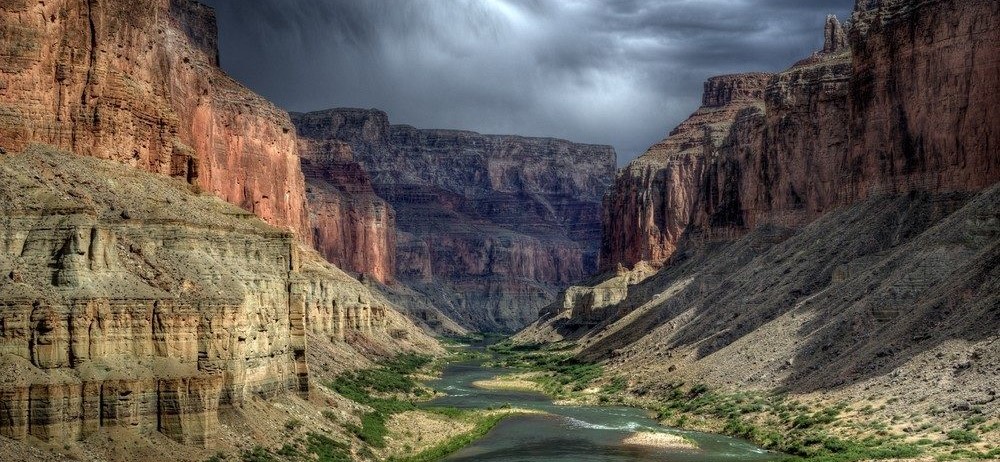
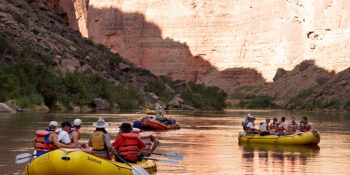
Over millions of years, the Colorado River sliced through layers of rock, revealing a cross-section of Earth’s geological history. The river exposed ancient rock formations, some dating back nearly two billion years. The Colorado River is the only river regularly rafted within Grand Canyon National Park.
The Little Colorado River
One of the Colorado River’s major tributaries, the Little Colorado River joins the main river at the Grand Canyon’s eastern end. Though much smaller than its namesake, the Little Colorado River plays a significant role in the region’s ecosystem and cultural history.
Draining much of Eastern Arizona and some of Western New Mexico, one of the Little Colorado River’s main sources are the White Mountains in Arizona. From here it runs through the Painted Desert before entering the Grand Canyon. While for much of the year much of the stream bed appears dry, closer to the Colorado River spring provide striking turquoise blue water, a result of dissolved minerals like calcium carbonate. This vibrant color contrasts sharply with the surrounding red and orange canyon walls, creating a memorable scene. During monsoon season and spring runoff the Little Colorado River runs brown.
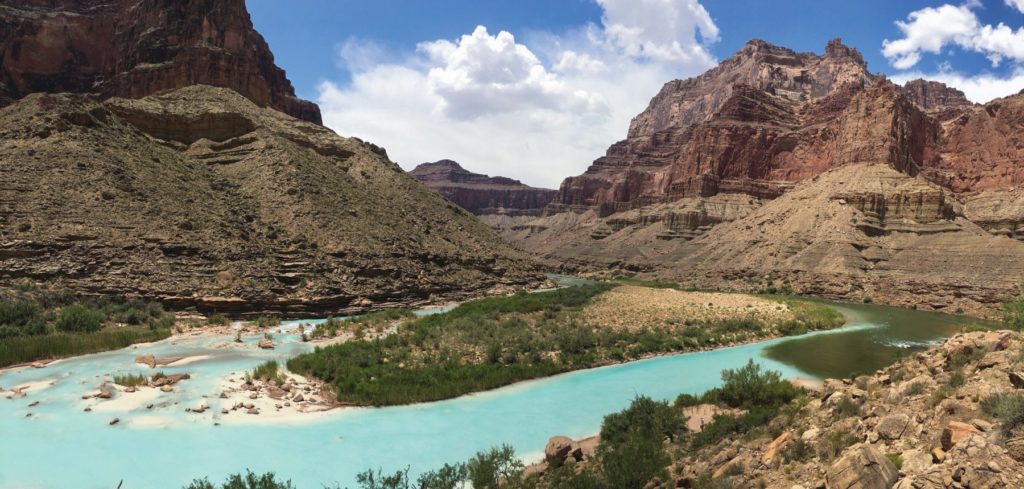
For many Indigenous tribes, including the Hopi and Navajo, the Little Colorado River holds deep spiritual meaning. It is considered sacred and features prominently in creation stories and ceremonies. The confluence of the Little Colorado River and the Colorado River is especially revered, making it a place of pilgrimage for some Native American groups.
Find Your Grand Canyon Rafting Adventure…
Download Grand Canyon Trip Planner

Call Us!
We find a phone call is the easiest way to find your best trip.

Have a question, send us a note. We’re here to help.

Find Your Trip
Request a trip search, we’ll find tours meeting your criteria.
*** Our service is free to you and paid for by our partner outfitters. We guarantee the same price as booking directly with the outfitter.
The Paria River
Another important tributary of the Colorado River is the Paria River, which enters the Grand Canyon from the north. Known for its rugged and remote beauty the Paria offers a different experience than the more accessible Colorado River.
Originating in southern Utah, the Paria River flows through the Paria Canyon-Vermilion Cliffs Wilderness. It’s journey ends at the Colorado River near Lee’s Ferry, the starting point for many Grand Canyon river trips. The Paria River’s winding course through narrow slot canyons provides a challenging and rewarding experience for hikers and backpackers. The river’s water levels rise and fall quickly with flash floods during the monsoon season.
Though not as well-known as the Colorado River, the Paria River’s contributions to the Grand Canyon’s landscape are significant. With Glen Canyon dam stopping historic sources of sand, the Paria is now one of the major sediment sources. The sandbars created along the Colorado River, provide vital habitat for wildlife and campsites for river runners.
Thunder River: A Unique Underground Marvel
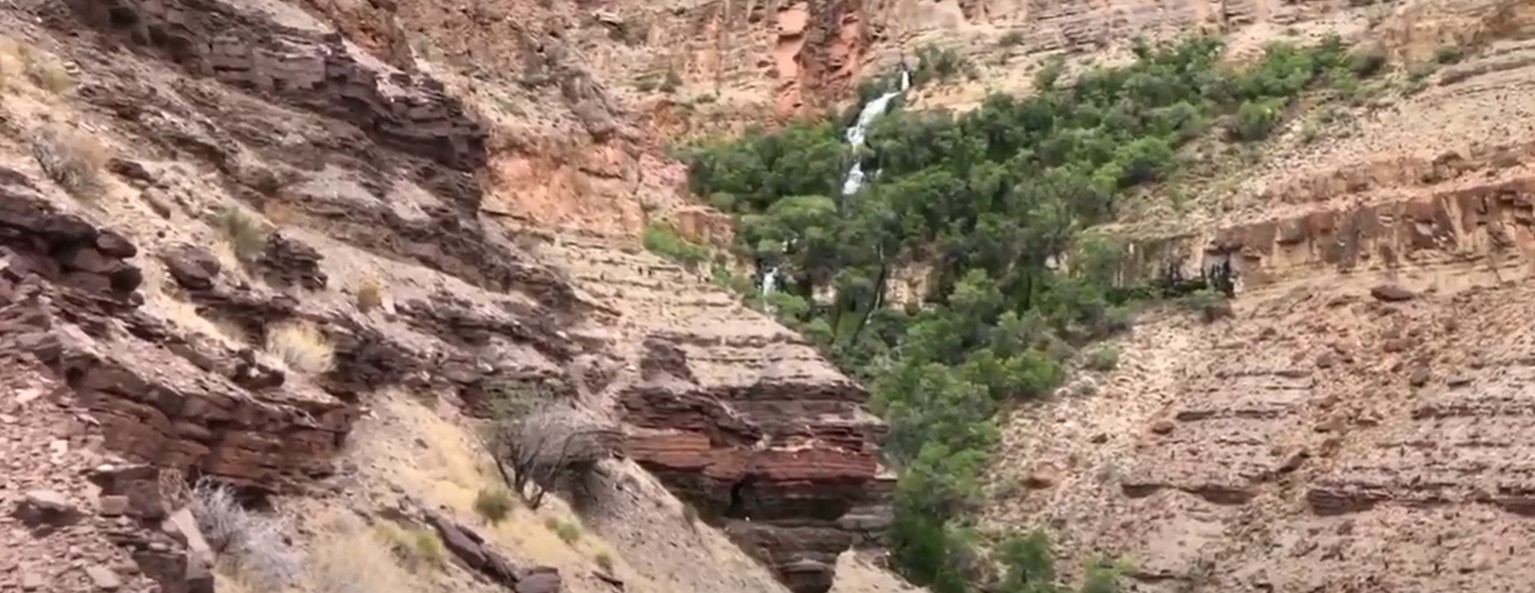
One of the most unique and fascinating rivers in Grand Canyon National Park is Thunder River. Unlike most rivers fed by surface water sources, Thunder River emerges from an underground spring, cascading dramatically out of a cliffside in the western part of the Grand Canyon. This short but powerful river flows from Thunder Spring, one of the largest springs in the Grand Canyon, located about 3,000 feet below the canyon rim.
Thunder River’s emergence is sudden and impressive, as it gushes out of the cliff. From there the river continues on a steep descent into Tapeats Creek, a tributary of the Colorado River. The river’s powerful flow creates a thunderous roar, which gives the river its name. One of the shortest rivers in the world, Thunder River covers just a few miles before joining Tapeats Creek.
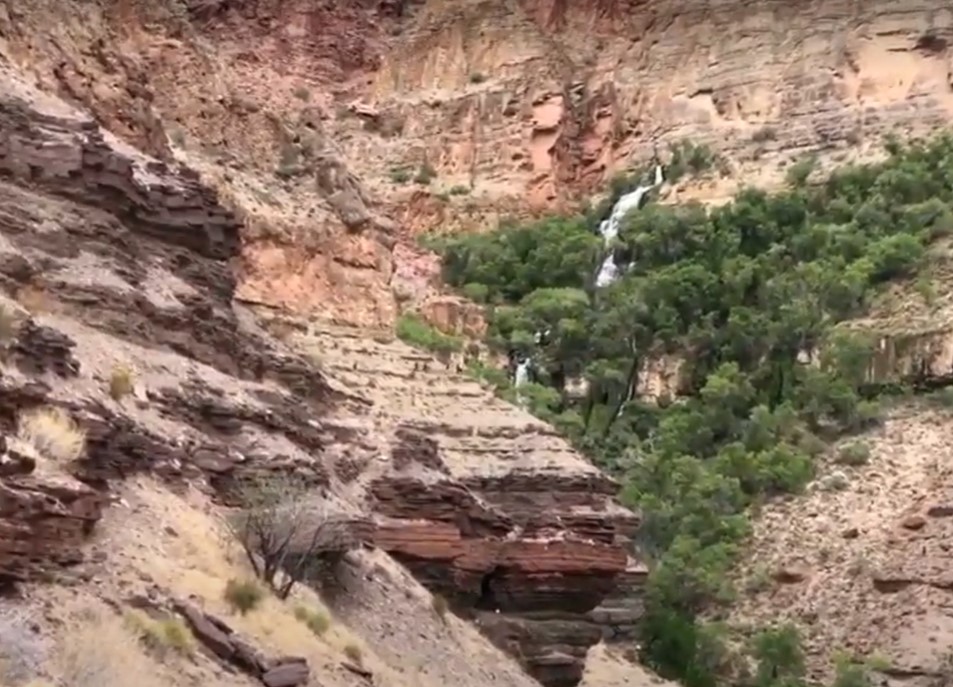
The hike to Thunder River is considered one of the most challenging and rewarding in the Grand Canyon. The trail is steep and rugged, descending from the North Rim through a series of switchbacks to reach the river. While it is an arduous journey, hikers are rewarded with one of the most unusual hydrological and scenic features in the park.
The Havasu Creek
While not technically a river, Havasu Creek, is the best known tributary of the Colorado River due to its stunning waterfalls and vibrant blue-green waters. Flowing from the Havasupai Reservation, Havasu Creek descends through a series of breathtaking waterfalls before joining the Colorado River in the western part of the Grand Canyon.
The travertine formations along Havasu Creek create natural dams, resulting in cascading pools of crystal-clear water. The most famous of these waterfalls, Havasu Falls, attracts visitors from around the world, who hike down from the rim to swim in the refreshing waters. Due to being a shorter narrower canyon that the Little Colorado River this canyon contains more vegetation.
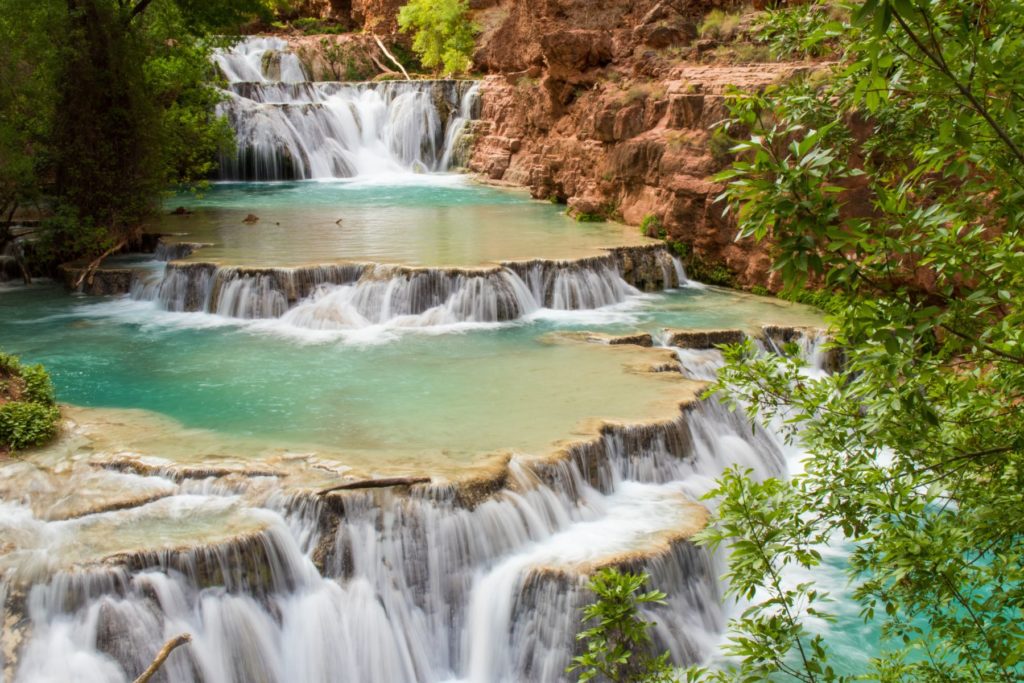
Havasu Creek is not just a beautiful destination; it is also a lifeline for the Havasupai people, who have considered the canyon home for centuries. The creek’s waters sustain their crops and provide a vital water source in an otherwise arid environment. Historically people lived in the canyon during the summer and went up on the plateau during the winter when sun rarely hits the canyon floor.
Conclusion
The rivers that flow through Grand Canyon National Park are more than just waterways; they are the forces that have shaped the landscape, supported life, and provided spiritual significance to the people who call the canyon home. From the powerful Colorado River to the dramatic Thunder River and the serene Havasu Creek, these rivers offer a glimpse into the natural and cultural history of one of the most iconic landscapes on Earth. Whether you’re an adventurer seeking the thrill of whitewater rapids or a traveler in search of natural beauty, the rivers of the Grand Canyon have something to offer everyone.
Start Planning Your Best Adventure
Dispatches from adventure tours around the world and tips for intrepid travelers. Read Our Blog
Grand Canyon Rafting Insights for Seniors
In this post we discuss our favorite trips options, the type of activity to expect on the rivers, common challenges, amenities and optional times of year for Seniors.
Navigating Dietary Limitations on Multi-day Rafting Trips
Whether you have allergies, follow a specific diet, or prefer certain foods, planning ahead is key to ensuring everyone enjoys the journey. Here’s how outfitters typically handle dietary concerns to make your rafting experience both enjoyable and safe.
Keep Reading > Navigating Dietary Limitations on Multi-day Rafting Trips
Upper vs. Lower Grand Canyon: Which Section is Best for Your Rafting Adventure?
Which section of the Grand Canyon is better, the Upper or Lower? This question arises frequently for guests considering the “Split Canyon trips,” which involve a mandatory 8-10 mile hike on the Bright Angel Trail. Here’s a breakdown to help you decide which section is best for your adventure.
Keep Reading > Upper vs. Lower Grand Canyon: Which Section is Best for Your Rafting Adventure?